
By the Fierce Tennis Editorial Team Technical Review: Strategic Match-Play Division
In the modern game, the highlight reels are filled with screaming down-the-line winners and delicate drop shots. However, if you watch a full match between Top 50 professionals, you will notice something different: the relentless pursuit of the deep cross-court ball.
At Fierce Tennis, we define “Fierce” not as reckless aggression, but as the ability to dominate your opponent through superior positioning and tactical discipline. The “Neutralize to Weaponize” framework is the cornerstone of elite baseline play. It is the art of using a heavy, safe, cross-court ball to force a weak reply, which then gives you the “license” to attack.
The Geometry of Success: Why Cross-Court?
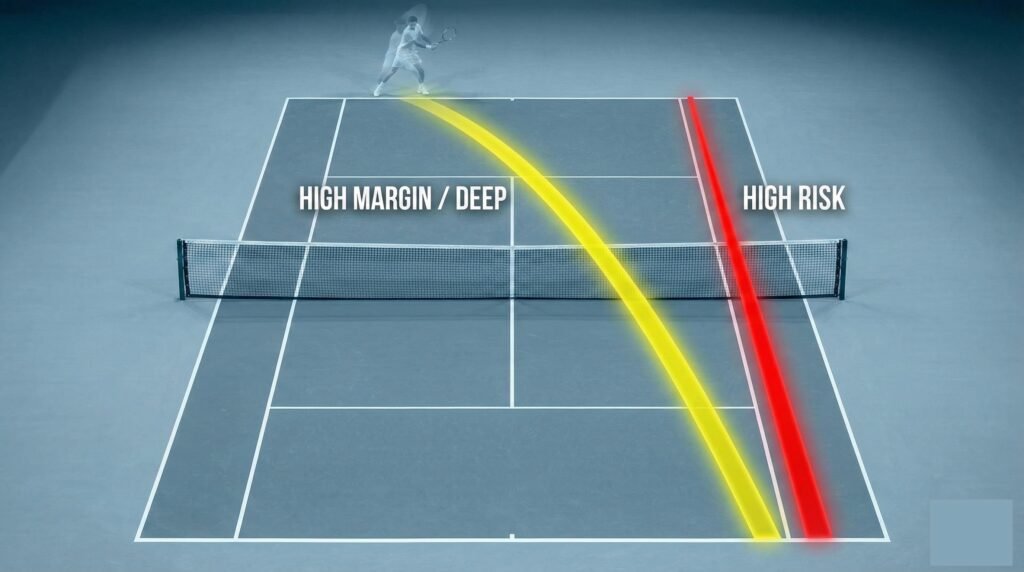
Before we look at the mechanics, we must understand the physics of the court. Tennis is a game of margins, and the cross-court shot offers the widest margins in the sport for two primary reasons:
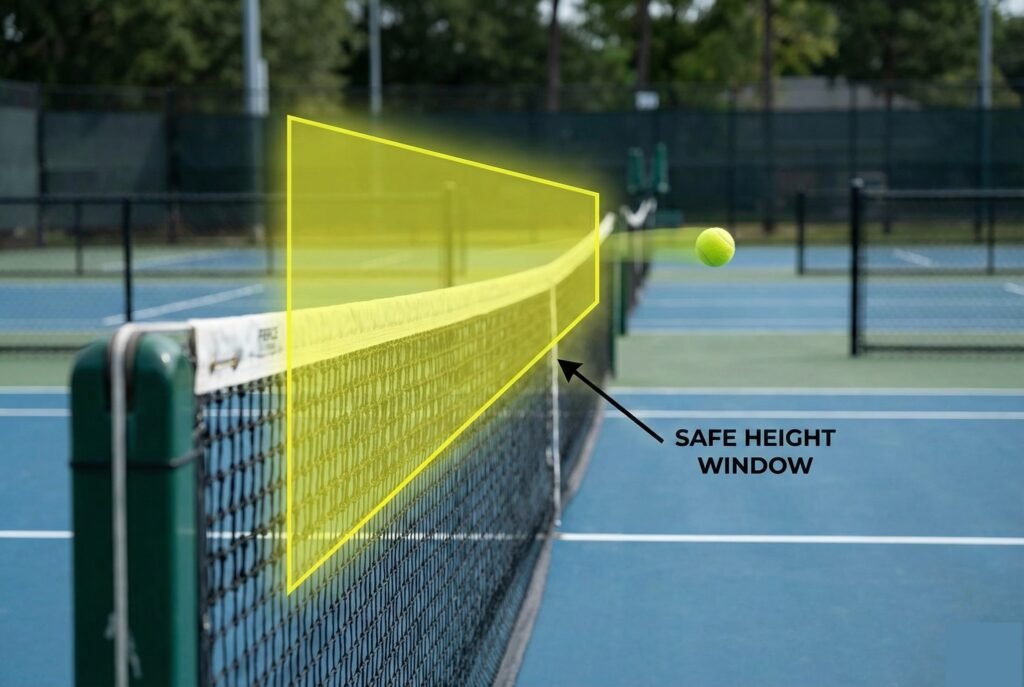
- The Net is Lower: The net is 3 feet high at the center strap and 3 feet 6 inches at the posts. By hitting cross-court, you are hitting over the lowest part of the net.
- The Court is Longer: The distance from baseline corner to baseline corner diagonally is approximately 82.5 feet, whereas hitting straight down the line is only 78 feet. You have nearly 5 extra feet of “runway” to keep the ball in play.
If you are in a defensive or neutral position and you try to change the direction of the ball down the line, you are hitting over a higher net into a shorter court. That is low-percentage tennis.
Phase 1: The “Neutralize” (The Art of the Deep Cross-Court)
When you are in a rally and neither player has an advantage, your primary goal is to Neutralize. This means hitting a ball that is so deep and so heavy that your opponent cannot move forward or create an angle to hurt you.
The Technical Blueprint for the Neutral Ball
To hit a high-level neutral ball, you need to adjust your internal “targeting system”:
- Target Height: Aim for 3 to 5 feet above the net. This ensures the ball clears the net with a massive safety margin and uses gravity to pull it deep into the opponent’s territory.
- The Power of Topspin: A “fierce” neutral ball isn’t flat. It utilizes heavy topspin (RPM over raw MPH). This spin causes the ball to “jump” off the court, pushing the opponent’s contact point above their shoulders—a notoriously difficult height to generate power from.
- The Deep Third: Your target is the back 1/3 of the court. A ball that lands near the service line is a “dead” ball; a ball that lands within 3 feet of the baseline is a weapon.
Editorial Note: If your opponent is pinned behind the baseline, they cannot hurt you. The deeper you hit, the more you shrink the court for them.
Phase 2: Recognizing the “Short Ball” Cue
The “Weaponize” phase only begins when you have successfully neutralized your opponent. You must wait for the Short Ball Cue. A short ball isn’t just a ball that lands near the net; it is any ball that allows you to move inside the baseline and take the ball on the rise. When your deep cross-court ball forces your opponent to lunge, slice defensively, or hit a “floater,” the transition begins.
The Visual Cues of a Weak Reply:
- Opponent’s Balance: Are they falling backward or leaning to one side?
- Ball Trajectory: Is the ball traveling slowly with a high, loopy arc?
- Contact Point: Did they hit the ball late or out of their optimal strike zone?
If you see any of these, you have earned the right to stop neutralizing and start weaponizing.
Phase 3: The “Weaponize” (The Attack)
Once you step inside the baseline, the geometry changes. You are now closer to the net, which means you have better angles. This is where you pull the trigger.
1. The Inside-Out Forehand
If the short ball is in the center of the court, the elite play is to move around the ball and hit an Inside-Out Forehand. By using your forehand (typically your strongest weapon) to hit into the opponent’s backhand corner, you maintain pressure while keeping a high-margin target.
2. Changing Direction Down the Line
This is the “Fierce” moment. If you have moved your opponent wide with a cross-court ball and they give you a short ball in return, you can now change the direction to the open court (down the line). Because you are inside the baseline, the distance the ball has to travel is shorter, and your opponent has less time to react.
The “Fierce” Training Drill: The 2-1 Pattern
To master this transition, we recommend the 2-1 Pattern Drill with a partner or coach.
- The Drill: You hit two consecutive balls deep cross-court (Neutralize). Your partner is instructed to feed you a shorter, weaker ball on the third shot.
- The Objective: On the third ball, you must aggressively move your feet, step inside the baseline, and hit a winner or a forcing shot down the line (Weaponize).
- The Discipline: If your first two balls aren’t deep enough, do not attack the third. You must “earn” the attack.
Conclusion: Tactical Maturity
Mastering the baseline isn’t about hitting the hardest ball; it’s about hitting the right ball at the right time. By committing to the deep cross-court rally ball, you force your opponent into a defensive mindset. You become the hammer, and they become the nail.
Play with patience. Neutralize the threat. Then, and only then, weaponize your talent to finish the point.